Français
 Deutsch
 Italiano
 Español
 An exclusive space for our adoptive families.

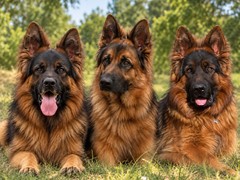
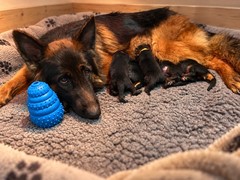
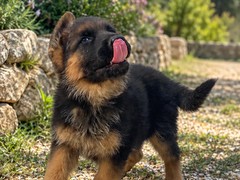
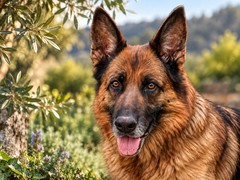
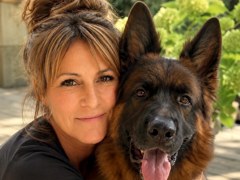
The Des Terres d’Harmony® Team
Meet our short-coat breeding dogs, their bloodlines and their health results.
Meet the team
Professionals
Our news
Choose your language
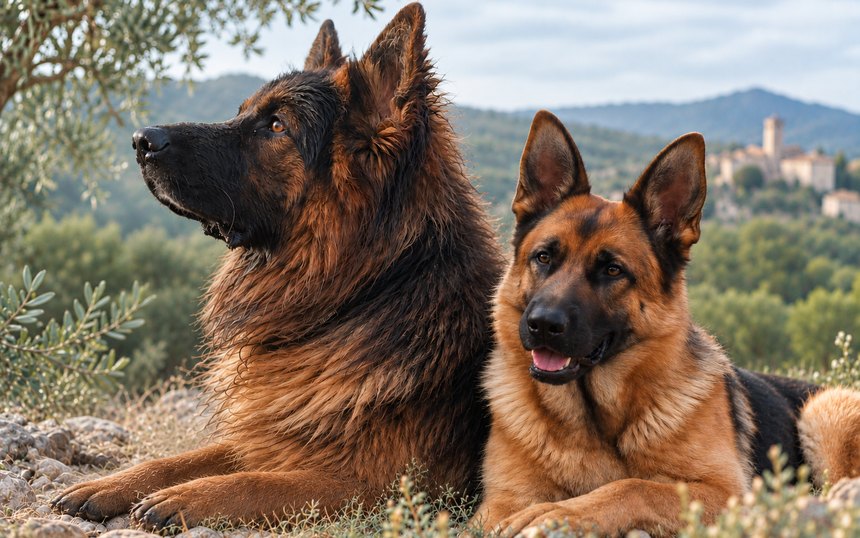
One breed, two coat varieties, the same exceptional character.
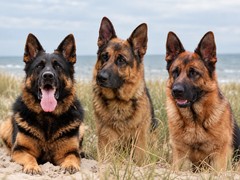
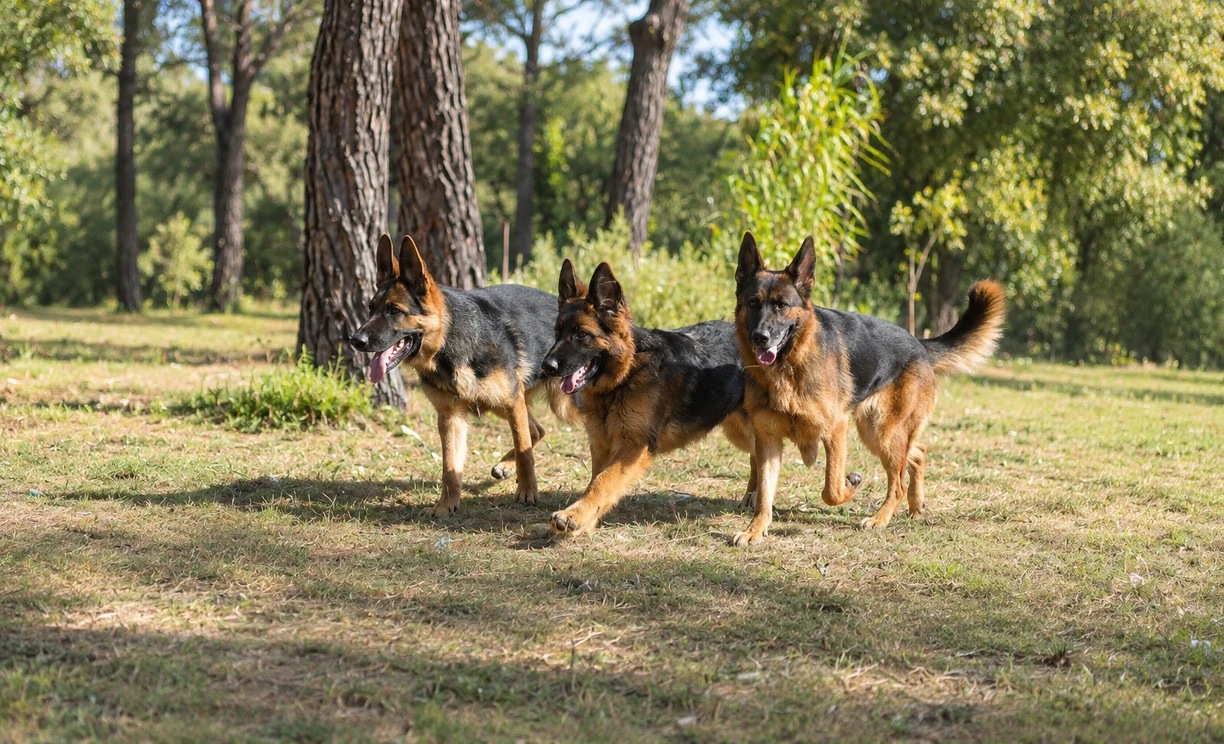
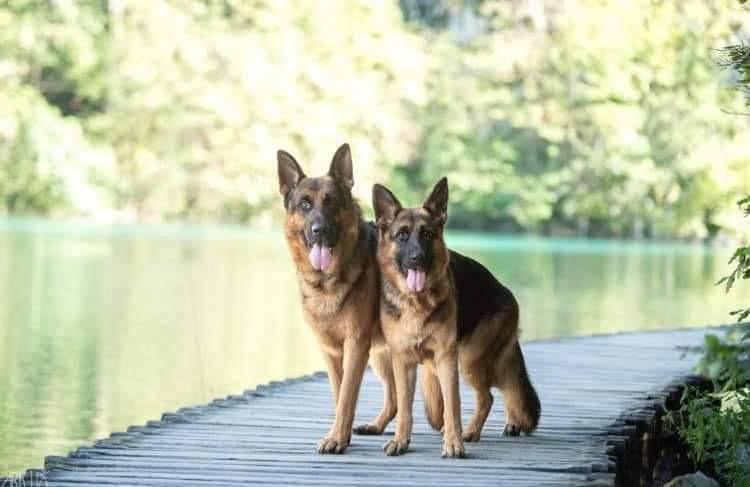
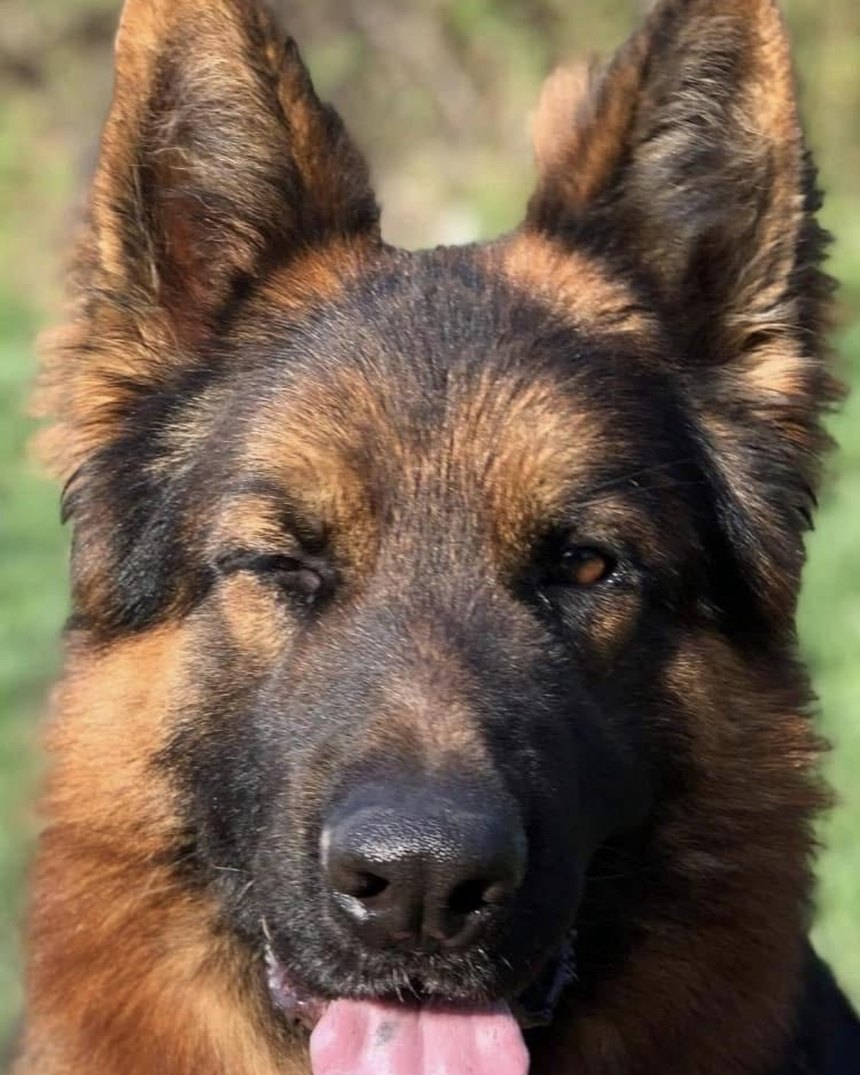
The short-coat German Shepherd wins people over with its athletic build, its sturdiness and its natural elegance.
A versatile, well-balanced dog, it thrives as much within a family as in sport and working activities.
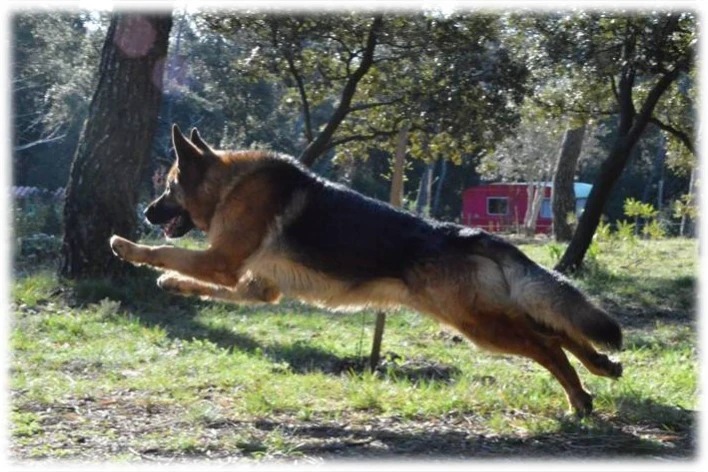
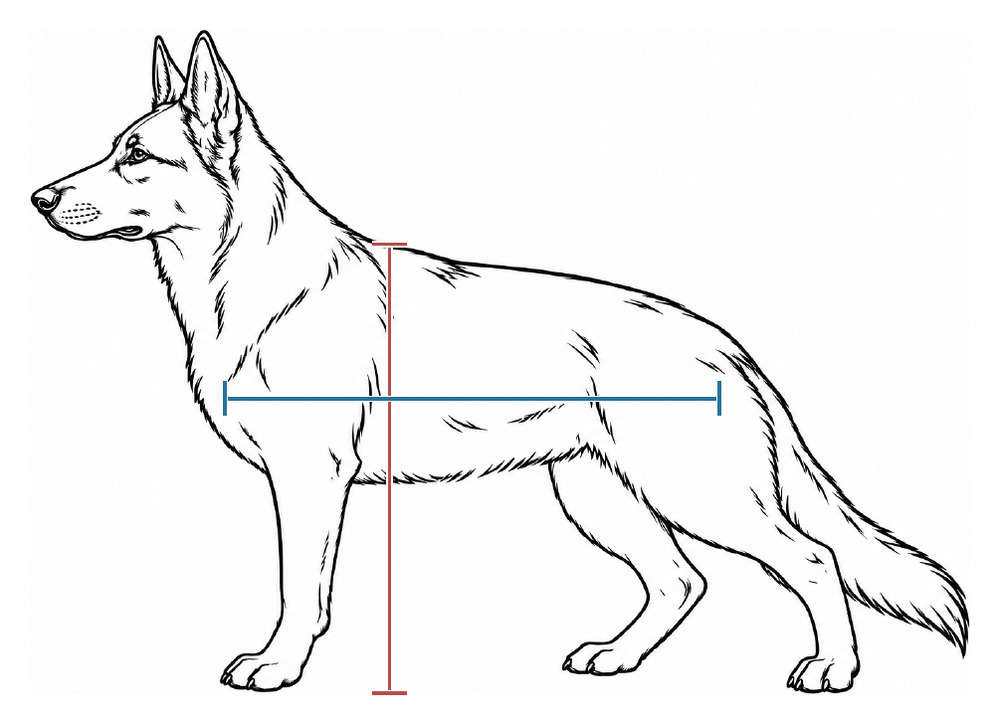
Size: At the withers: 60 to 65 cm for males, 55 to 60 cm for females.
Proportions: The body is slightly longer than it is tall: its length exceeds its height by 10 to 17%.
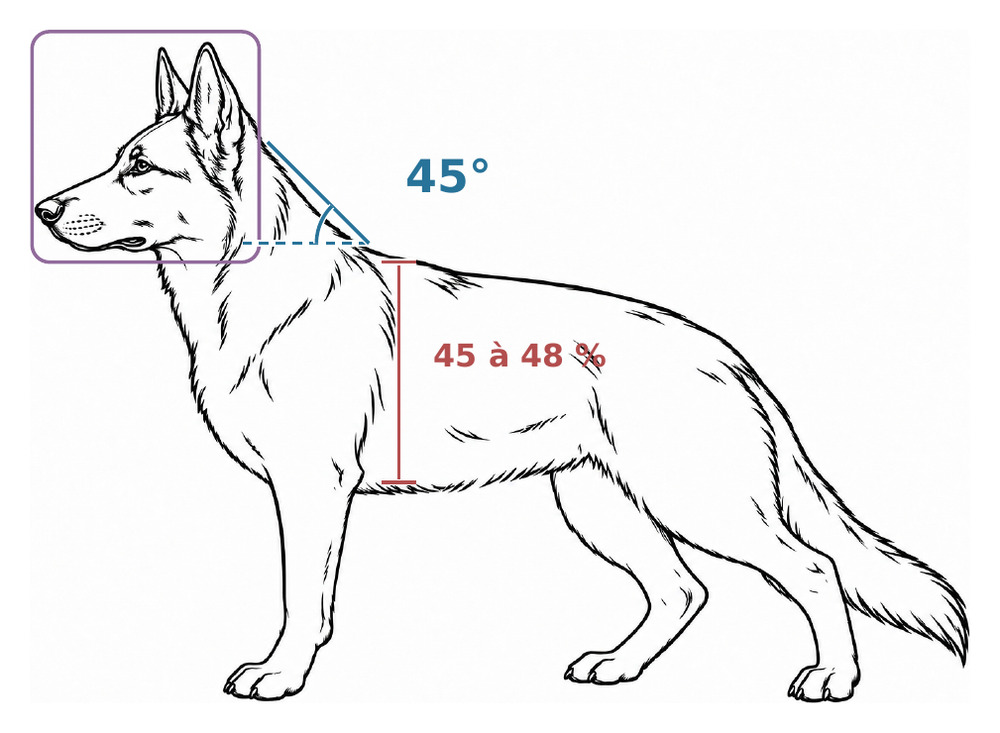
Head: In proportion, not heavy, with a skull and muzzle of similar length.
Neck: Strong and muscular, carried at about 45° to the horizontal.
Chest: Its depth is about 45 to 48% of the height at the withers.
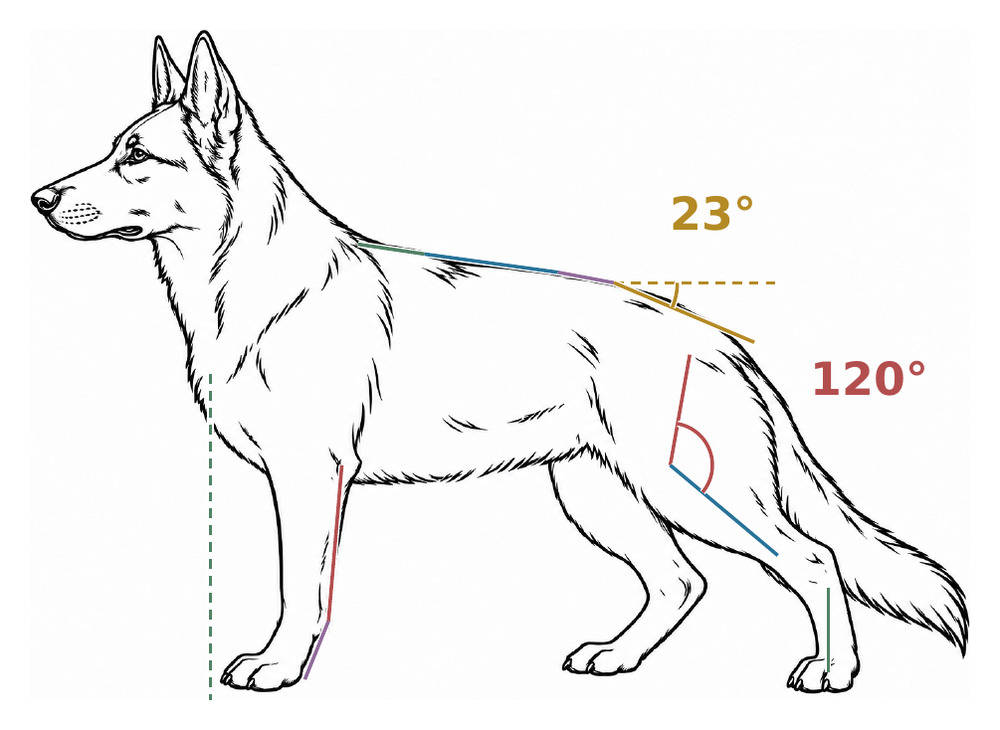
Back and croup: A firm, straight back, followed by a long croup sloping at about 23°.
Forelegs: Straight forearms and a slight slope above the foot.
Hind legs: Muscular thighs, a thigh–lower-leg angle of about 120° and firm hocks.
The stack is a presentation posture used at shows to assess the dog's proportions and angulation. One hind leg is placed forward, the other back: this can lower the hindquarters and accentuate the slope of the topline. The dog is also assessed in movement.
Schematic illustrations. Sources: FCI standard no. 166 (Société Centrale Canine) and CCBA.
Meet our short-coat breeding dogs, their bloodlines and their health results.
Meet the teamDiscover our planned short-coat litters, the intended pairings and expected periods.
See the calendarDiscover the dogs bred by us, year after year, since 2015.
Over the years